Aleidra Allen is a social change advocate and entrepreneur. With a background in higher education administration, Aleidra served as a higher education practitioner for 4 years. During that time, she coordinated leadership programs and multicultural education, and advised student organizations and fraternities and sororities, . However, as society entered into the current social movement, Aleidra’s career was redirected.
In September of 2017, Aleidra took a leap of faith and left higher education to start her own business. She is now the founder and owner of PIE, which stands for Purpose In Everything. PIE is a start-up social enterprise that sells every day products, adding purpose to the purchases by donating 5% of its net sales to fund social change work. The products are also ethically made, being sweatshop-free, and many of them are environmentally friendly.
PIE is committed to social justice, with the goal of inspiring consumers to contribute to social change through conscious and intentional buying. You can follow PIE on Facebook, Instagram, and Twitter: @piemovement, and visit the PIE website at www.piemovement.com to #BuyOnPurpose. If you are interested in having Aleidra facilitate diversity and inclusion trainings/workshops for you school, organization, or corporation, please email info@piemovement.com.
Aleidra has shared her perspectives on larger platforms as a repeating guest on HuffPost Live. She has also been published on Watch The Yard and Blavity.
Aleidra received her Bachelor of Science in Community Communications and Leadership Development from the University of Kentucky (UK). She later earned her Master of Arts in Education (specialization in Higher Education Administration) from Louisiana State University (LSU). Aleidra is a board member for Continuity, an active member of the Gamma Omega Chapter of Alpha Kappa Alpha Sorority, Inc., a “Big” in Big Brothers Big Sisters, and a member of the choir at Friendly Temple Missionary Baptist Church in St. Louis, MO.
Watch Aleidra on HuffPost Live (Aleidra speaks at minutes 4:10, 10:51, 17:34, and 20:13)
On November 12, 2015, Aleidra Allen was featured on a HuffPost Live segment. She shared perspectives on police body cameras. Aleidra speaks at minutes 4:10, 10:51, 17:34, and 20:13.
From HuffPost Live website: Police body camera footage helped indict two officers who killed a 6-year-old boy in Louisiana, and now Philadelphia is planning to expand their use. Is it time for body cams to become a standard feature in American policing?
Host:
Nancy Redd
@nancyredd
Guests:
Aleidra Allen @klassy_lei (St. Louis , MO)
Student Involvement Center, Saint Louis University
Chris Rosbough @Chris_Rosbough (Tallahassee, FL)
Criminal Justice Program Director, Pegasus
Jamira Burley @JamiraBurley (Washington, DC)
Senior Campaigner, Amnesty International
Meme shared on Facebook that inspired Aleidra to write this piece.This meme (left) really bothers me. It bothers me because it perpetuates the stereotypes of black women being too independent, angry, having a bad attitude, undesirable, less than, etc. These stereotypes continue to be perpetuated by white and black people (the meme was brought to my attention from being shared by black men), and I am frustrated to specifically see black men degrade black women in this way.
It frustrates me because people who perpetuate these stereotypes give little consideration to what could make black women be perceived as “angry,” or lead them to take on this “strong and independent” mentality. They do not consider how black female slaves often had their husbands and children torn from them (sometimes an enslaved man or woman pleaded with an owner to purchase his or her spouse to avoid separation), forcing a level of independence and emotional impact. They do not consider how to this day, black men are incarcerated at 6 times the rate of white men and serve exponentially longer sentences, again forcing a level of independence and emotional impact. They do not consider how in America, black women have a net worth of $100, having an unemployment rate that unlike most other demographic groups, continues to rise, and a wage gap that even a college education cannot bridge. They do not consider how society continues to remind people that black women are not beautiful, setting beauty standards and norms that are the exact opposite of black women’s natural being (light skin better than dark, straight hair better than curly, thin body better than curves…and when curves are accepted, they are sexualized as if that is all a curvaceous woman is good for). They do not consider how common attributes of black women’s personalities and culture are often deemed as “unladylike” and wrong (expressing your opinion, being “loud”), leading some men to actually believe that black women are indeed undesirable. Hopefully you can see that many aspects of our society have contributed to this perception of black women as angry, too independent, and too opinionated.
It’s unbelievable that if a black woman falls short of overcoming all of these societal obstacles that she faces, if she so happens to fall victim to this oppression, then she is blamed for being angry, having a bad attitude, and not knowing how to accept having a man. It’s so ironic that black women are expected to be strong enough to thrive in a society where they are disadvantaged all around, but are then chastised for being “strong and independent.”
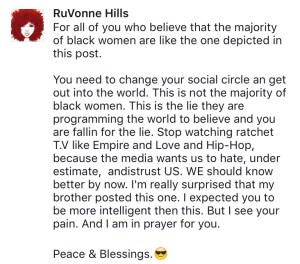
Comment left on Facebook post of meme.Is this meme supposed to “help” black women stop having an attitude and stop being (too) strong and independent? If so,
it’s counterproductive because all it does is make black women actually angry, and rightfully so. If black women see black men share this meme openly, all it does is make black women defensive, and possibly feel the need to be more independent, because we are being generalized, our character is being attacked, and we are being portrayed as less than women of other races.
How are we as black women supposed to take this? This meme lets us know that we can add (some) black men to our list of obstacles because instead of advocating for us against these stereotypes and ideas of black women, instead of fighting against the systems and oppression that contribute to these stereotypes and ideas of black women, instead of loving us through any emotional or mental impacts and insecurities that we have because of these stereotypes and ideas of black women, black men will now join in on keeping us down.
We are in a movement for black lives right now. We’re trying to make the world believe that black lives really do matter– and not only in regard to police brutality. The movement is about gaining freedom and equality from ALL systems and beliefs that disadvantage, target, omit, and oppress black people, and this is one of them.
Even in this movement, we see black women being disadvantaged and left out. That’s why some have taken additional steps past “black lives matter” to say black WOMEN’S lives matter, and use hashtags like #SayHerName. It’s so unfortunate to see this omission because many black women are on the front line advocating and fighting for black men against police brutality. It is so sad that black women can’t get that same support from black men, even with something as simple as not spreading social media memes that degrade us.
This shows a need to redefine masculinity (with a new definition that includes a range of human emotion, is more flexible than dichotomous) because men’s quest to fulfill this societal norm is hindering (black) women. So, while I do not agree with the perception of black women that this meme portrays, I am acknowledging the potential roots of the perception, with the hope that if we are aware of these social constructs, we can learn to love each other through them, instead of using them to put each other down.
No doubt, there are probably black women that display some of these stereotypical characteristics, just like there are women of any other race that probably show these traits. But maybe she is showing them for a reason. It’s problematic that some black men are choosing to stereotype black women and write them off as undesirable partners instead of considering why she may act this way, or more importantly, their possible role in why she is acting that way (specifically on a one-on-one basis, in a romantic relationship). I guess it’s a lot easier to criticize the black woman based on the negative perception she’s been given by society than to look at yourself and ask what you may be doing to yield that type of response from her.
There is a thin line between a black women not putting up with a man’s crap and being angry, (too) strong, and (too) independent. Just because a black woman does not say “yes” to everything you want or doing everything your way does not make her “angry.” It just means she expects (and will not settle) to be treated as the queen she is.
“Both the Democratic and Republican National Committees have agreed to give their blessing to a presidential town hall set up by activists in the Black Lives Matter movement. But organizers within the network have said that gesture isn’t enough. They want the parties to devote one of their official — and more high-profile — debates to racial justice issues.”
Aleidra, along with 5 other black activists and organizers, posed the questions they would ask candidates at a Democratic debate on racial justice issues. Check out the questions and full article!
Article by Philip Lewis, Fellow, The Huffington Post
Watch Aleidra on HuffPost Live (Aleidra speaks at minutes 6:41, 14:27, and 20:37)
On October 22, 2015, Aleidra Allen was featured on a HuffPost Live segment. She shared perspectives on the discussion of the Black Lives Matter movement during presidential debates, the Democratic National Committee (DNC) promoting a Black Lives Matter town hall meeting, and the recent burning of churches in St. Louis, MO. Check it out below (Aleidra speaks at minutes 6:41, 14:27, and 20:37)!
From HuffPost Live website: With the Democratic National Committee agreeing to promote a presidential town hall hosted by the Black Lives Matter movement, we discuss how candidates should approach the social justice campaign and how much it will affect the upcoming election.
Hosted by:
Alyona Minkovski
Guests:
Julia Craven@CurlyCrayy (Washington, DC) HuffPost Politics Reporter
Elle Hearns@SoulFreeDreams (New York , NY) Central Region Coordinator, GetEQUAL; Strategic Partner, Black Lives Matter
Aleidra Allen@klassy_lei (St. Louis , MO) Student Involvement Center, Saint Louis University
Martese Johnson @martesejohnson_ (Charlottesville, VA) Activist
Watch Aleidra on HuffPost Live (Aleidra speaks at minutes 9:50 and 23:23)
On August 11, 2015, Aleidra Allen was a special guest on a HuffPost Live segment. She shared perspectives on what Dr. King described as the “white moderate,” and the role of empathy in the Black Lives Matter movement. Check it out below (Aleidra speaks at minutes 9:50 and 23:23)!
From HuffPost Live website: Senator Bernie Sanders left a speech this weekend after Black Lives Matter protesters took over his campaign event. We discuss the criticism that #blacklivesmatter is alienating potential allies and the role of the movement in 2016 politics.
Hosted by:
Alyona Minkovski
Guests:
Jamil Smith (New York, NY) Senior Editor, The New Republic @JamilSmith
Ben Cohen (Washington, DC) Editor and Founder, TheDailyBanter.com @thedailybanter
Aleidra Allen (St. Louis, MO) Program Coordinator for the Student Involvement Center, Saint Louis University; Student Involvement Center, St. Louis University @klassy_lei
Seems like just yesterday and 10 years ago all at the same time. Regardless of how you feel about the methods, the people of Ferguson (and STL) brought attention to a systematic issue that has been unnecessarily taking lives for decades. I am so thankful for the people of Ferguson/STL, and thankful that 365 days later, the movement still lives, and now all over the country.
What’s most unbelievable is how many hashtags we’ve had to create for unarmed, black people killed by police just over this past year. Unbelievable. But maybe now, a year and so many names (people) later, more people can see and understand the issue.
Today, I’m thinking of #MikeBrown and saying a special prayer for his family, and all families that have lost loved ones to police brutality. I hope they can find some peace in knowing that change will come from their sacrifice.
It’s been a long, challenging year. I never imagined myself being a part of a movement like this….protesting, volunteering, blogging, presenting to staff/students, none of that. But I’m so thankful for living in St. Louis, and for the passion I’ve developed for eliminating oppression.
I hope this movement has taught many empathy, and that it continues to do so. Just because something is not your reality, doesn’t mean it’s not someone’s reality. And just knowing that it’s someone else’s reality, is (should be) enough reason to care.
The march indeed continues.
My niece, Kristen, has autism. On Saturday July 11, 2015, Kristen’s parents, Lamont and Krissalyn Love, will host a block party to raise awareness and funds for less fortunate people who have children diagnosed with autism. Proceeds will go to the Lexington Hearing and Speech School in Lexington, Kentucky (their hometown).
Autism spectrum disorder (ASD), or autism, is a group of complex disorders of brain development characterized by difficulties in social interaction, verbal and nonverbal communication and repetitive behaviors (Autism Speaks Inc.).
1 in 68 children (1 in 42 boys and 1 in 189 girls) have autism.
Research has shown that a diagnosis of autism at age 2 can be reliable, valid, and stable.
Studies have shown that parents of children with autism notice a developmental problem before their child’s first birthday. Concerns about vision and hearing were more often reported in the first year, and differences in social, communication, and fine motor skills were evident from 6 months of age.
Autism commonly co-occurs with other developmental, psychiatric, neurologic, chromosomal, and genetic diagnoses (co-occurrence of one or more non-ASD developmental diagnoses is 83%; co-occurrence of one or more psychiatric diagnoses is 10%)
It is estimated to cost at least $17,000 more per year to care for a child with autism compared to a child without autism. Costs include health care, education, ASD-related therapy, family-coordinated services, and caregiver time. For a child with more severe ASD, costs per year increase to over $21,000. Taken together, it is estimated that total societal costs of caring for children with ASD were over $9 billion in 2011.
In addition to medical costs, intensive behavioral interventions for children with ASD cost $40,000 to $60,000 per child per year.
Please read the Love family’s story and donate here to help them achieve their goal of raising $5,000.
Their Story: We noticed Kristen was not speaking like children her age, so we quickly got First Steps to try and intervene. Unfortunately, progress was not made in the way that we had hoped. Right around time for Kristen to turn three, we got assessments after assessments done to see why Kristen was not hitting her developmental milestones. We learned shortly thereafter that Kristen had autism.
We were devastated, as we didn’t know much about autism and we feared that she may not grow up to be a “functional” member of society. Fast forward a few months later, with prayer and patience, we have learned that autism isn’t a death sentence, but it is a help to hope sentence. We are hopeful with great intervention that our little Kristen will flourish to be the beautiful, smart, socially functional little girl that we foresee.
What we have also learned, is that along with patience, constant desires to learn more and more about autism, that there is a large expense attached to having a child with special needs. Our goal is to begin an annual tradition that grows to be a revenue builder for grants, scholarships, and research.
Vision: What do you think of when you think of a block party? We automatically think of a neighborhood party with family and friends, full of laughter, music, fun, food, and games. That’s our vision for the block party.
Here is the twist though: with children who have autism, they often have a certain toy or kind of toy that brings them joy. In our experience with Kristen, she absolutely loves anything to do with blocks: building blocks, Legos, building shapes, etc. So on one hand, it will be your typical block party; but on the other: expect to be blown away!
This is a family event where we invite people indirectly and directly affected with autism or any special needs child to come and enjoy a night out. Our hope is to educate those who may not know much about autism to learn what it is like having autistism, as well as to learn what it is like to love someone with autism.
There will be building blocks everywhere, mostly made of cardboard boxes. There will also be “blocks” of times for scheduled events. The idea is to do things that would be appealing to children with autism to teach people how some children with autism respond. Some examples of blocks of time include (but are not limited to) music, art, get educated, testimonial, movement, inflatable, and movie.
Kristen’s Block Party will be on Saturday July 11, 2015 from 3 pm to 6 pm at Broadway Christian Church in Lexington, KY (187 N. Broadway). Please share this blog to spread the word! All are welcome to attend. And don’t forget, you can donate here.
On Sunday June 21, 2015, #GoHomeDeray top-trended Twitter nationally for at least 14 hours. The hashtag included tweets directed at Deray McKesson, an activist who became well known after the shooting death of Michael Brown in Ferguson, MO. You may recognize him from one of his more popular CNN interviews that took place in Baltimore, MD after the death of Freddie Gray. Since last August, Deray has been present in various cities to seek justice in incidents where racism is speculated. The tweets were largely from Deray adversaries who bluntly shared their opposition to his presence in Charleston, SC.
Those participating in the trending topic appear to believe that Deray and/or his views promoted the “riots,” looting, and other unrest that has occurred in response to various incidents across the country. They feel that Charleston is coping with its grief with unity and forgiveness, and that Deray’s presence is not needed or wanted.
This blog is not necessarily to defend Deray, but more so to discuss the repetition of history, disconnect, and irony demonstrated by #GoHomeDeray. It will also discuss how unity and protest can coexist.
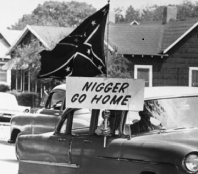
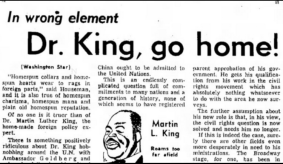
Unfortunately, it is not new for black people confronting racism to be told to “go home” by white people who prefer they just leave it alone. Black people were often told to “go home” when they called out racism and injustice, and advocated for their rights during the Civil Rights Movement. Even Dr. Martin Luther King, Jr. was told to “go home” in the Mason City Globe-Gazette in September 1965. While this is not the first time for this “go home” rhetoric, this may be the first time we’ve seen it done via social media. #GoHomeDeray makes us wonder how far we’ve actually come.
Additionally, #GoHomeDeray demonstrates that there are still people who do not understand black’s people’s plight and the issues being raised. The “riots” and looting that people do not want to see were not caused by Deray. They were caused by feelings of helplessness and pain; feelings that our society perpetuates (and has long perpetuated) through seemingly small and systematic forms of racism. Of course, I am not condoning this behavior. I am not saying that it is the right response. But in the words of Deray McKesson, “you don’t have to condone it to understand it.” If we want to see the “riots” and looting stop, let’s address the root of the issue so that people will not feel so helpless, like they have nothing to lose. Instead of telling people to “go home” let’s work to address the actual cause and alleviate the racial bias that yields this unwanted reaction.
Many of the trending tweets expressed that there is unity and forgiveness in Charleston so they do not need Deray to be there. The unity and forgiveness is indeed positive and necessary. However, it does not negate the need to address the racism that caused this massacre in Charleston. It is amazing and beautiful to see the families of the 9 victims choose forgiveness despite this life changing tragedy. But if we allow that forgiveness to prevent us from addressing the racist root of this crime, we will have let those 9 lives be taken in vain and we are bound to see something like this happen again. For too long, this country has been trying to overcome racism in this polite, politically correct, “kumbaya” way. Well, there is nothing polite, politically correct, or “kumbaya” about racism so until we address this thing directly, and stop being afraid to talk about it, we will be as effective as an umbrella in a hurricane. Policies still need to change. Systems still need to change. Hearts and minds still need to change. So activism is still necessary.
Lastly, #GoHomeDeray is ironic. There is a contradiction in emphasizing unity and forgiveness while also excluding people from being a part of it. Shouldn’t we want to invite people into that unity? What benefit is it to make such a positive experience “invitation only?” It seems like we would want even those who have responded in less favorable ways to be there, so that we could model a more ideal way. Making unity only for a certain group or type of people is actually the opposite of unity– it’s divisive. #GoHomeDeray took away from what seemed to be a first step in coming together and caused people to question the authenticity of the “unity” in Charleston, reiterating the lack of unity in this country.
Both unity and protest (defined as “something said or done that shows disagreement with or disapproval of something,” Merriam-Webster) can happen. We can unite to support the families and Charleston as they grieve an event in our nation’s history that will never be forgotten. And we can protest the racism, culture, and systems that affirm mentalities like that of Dylan Roof. They can coexist, and their coexistence can be beneficial. Just maybe, unity will cause understanding of the experience of Black people in the United States, which causes understanding of the need for change and protest, which motivates people to join the protest, which then brings us back to unity.
9 people have been killed. We should be doing everything in our power to ensure that they do not die in vain; that change and progress comes from their sacrifice and that of their families. #GoHomeDeray isn’t doing that.
Aleidra and Josh were interviewed for ACPA’s Confronting the Reality of Racism in the Academy. They shared their experiences with #OccupySLU, a 6-day protest that occurred on the campus of Saint Louis University (SLU) after the death of Michael Brown in Ferguson, MO. They also discussed the impact of being in St. Louis and SLU at such a time, the current issues of race in America, and the what colleges and university can do.










 adversaries who bluntly shared their opposition to his presence in Charleston, SC.
 Unfortunately, it is not new for black people confronting racism to be told to “go home” by white people who prefer they just leave it alone. Black people were often
  told to “go home” when they called out racism and injustice, and advocated for their rights during the Civil Rights Movement. Even Dr. Martin Luther King, Jr. was told to “go home” in the Mason City Globe-Gazette in September 1965. While this is not the first time for this “go home” rhetoric, this may be the first time we’ve seen it done via social media. #GoHomeDeray makes us wonder how far we’ve actually come.
 Additionally, #GoHomeDeray demonstrates that there are still people who do not understand black’s people’s plight and the issues being raised. The “riots” and looting that people do not want to see were not caused by Deray. They were caused by feelings of helplessness and pain; feelings that our society perpetuates (and has long perpetuated) through seemingly small and systematic forms of racism. Of course, I am not condoning this behavior. I am not saying that it is the right response. But in the
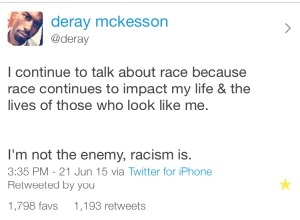 words of Deray McKesson, “you don’t have to condone it to understand it.” If we want to see the “riots” and looting stop, let’s address the root of the issue so that people will not feel so helpless, like they have nothing to lose. Instead of telling people to “go home” let’s work to address the actual cause and alleviate the racial bias that yields this unwanted reaction.
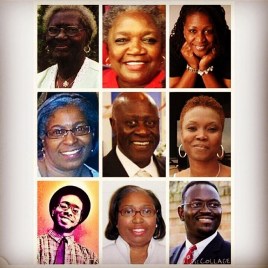 9 people have been killed. We should be doing everything in our power to ensure that they do not die in vain; that change and progress comes from their sacrifice and that of their families. #GoHomeDeray isn’t doing that.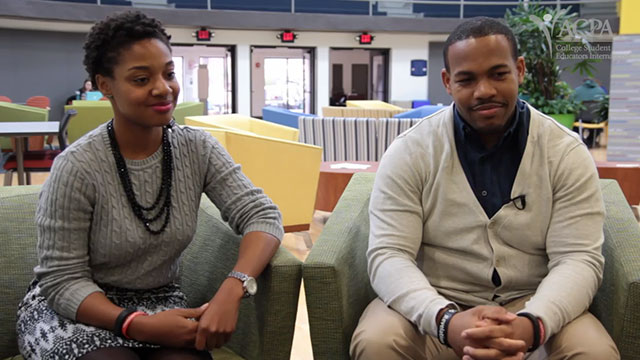
 Aleidra Allen