Between Bill Cosby’s sentencing and Brett Kavanaugh’s hearing, social media timelines are full of opinions and perspectives regarding sexual assault and the American justice system. Honestly, instances like these are very triggering for me so I have not said much, and have often elected to ‘sharing’ posts made by others.
But today, my sister texted me and asked, “Why are people so focused on black versus white in this Cosby situation?“, and because she’s my sister I did not mind speaking on the subject with her.
I think that others may have this same question. I also think that many people who are highlighting race in regard to Cosby’s sentencing do not realize the root of their perspective. So, I’m sharing the full text message (yes, I texted a book lol) that I sent to my sister, in hopes that it will provide maybe a different perspective and contribute to the start/continuation of a very important conversation on what it means to be pro-black, pro-women, and pro-justice overall. Please note that this is an unedited, informal text message to my sister so please forgive any typos, incomplete thoughts, etc.
Text message response:
Because of white supremacy and misogyny…we don’t always realize it but whiteness is our measure of everything. What white privilege grants people is what everyone else desires; which makes sense in a way because privilege is what should be everyone’s normal.
But people struggle to understand intersectionality…how multiple identities intersect with each other. So add gender in with race, and some people fail to acknowledge male privilege along with white privilege. And male privilege is honestly what some black people are actually protecting, but they are doing it through race. So they know that racism exists and can acknowledge that the system often works against black people but when they say “black people” they really mean black men. They aren’t acknowledging how male privilege is at play here and how it causes them to not believe women because “they weren’t there” but in that same breath, believe men even though “they weren’t there.” So that’s the misogyny.
This is why the struggle for black women is even more complex because black women typically get erased. When people are talking about race and black lives matter, they often are only talking about black men. They don’t say it bluntly and it’s subconscious but situations like this show it…because these people’s arguments are not sympathetic of or considerate of women…even though black women are also women and victims survivors.
This is complex and I’m trying to articulate it but basically these people subconsciously are not for women but they “are against racism”….at least when it comes to black men. This is why you see black people protest when black men are killed or brutalized by police but not black women. We have a limited perspective of what justice would be and it’s basically based on the white male experience and for black people, the black man is the closest to that. So what oppression has subconsciously caused us to do is to measure justice based on the white man and not actually right or wrong. Our definition of justice has become what the white man experiences. Many of us are more committed to being able to do what he does and willing to accept his lifestyle as justice, even if it isn’t actually justice for the victim. Because again, often times, black people don’t acknowledge our bias against all other identities outside of race, even though there are BLACK women, BLACK lgbt people, BLACK Muslims, black disabled people. Our advocacy as a people is rooted in advocacy only for the black man so a situation like this hits us to the core.
This is a powerful black man that “made it.” In many peoples eyes, he had pretty much gotten to the level of a white man (even though I completely disagree with that perspective)…until this. So people don’t know how to act and can’t see how their support of him in this moment actually shows that they are not pro-black because them not wanting him to be held accountable actually shows that they condone the oppression that he and people like him cause to women, including black women. Because they are misogynist, and don’t know it.
So I guess that’s the answer to your question. Why is this being made about race? Because misogyny. These people are not pro-women so in this situation they advocate for Cosby based on race and its confusing because no one is actually saying that they are bias against women…they’re all saying they are pro-black…but really the root of their pro-blackness is based on the black man and not inclusive of black women. So their pro-blackness is misogynistic.
If these people identified as both pro-black and pro-woman they wouldn’t be able to side with him. Period. But these people (maybe subconsciously) value men more than women so in a situation that involves both race and gender…they lean towards race. They “pick the side” of race. But for those of us who are both pro-black and pro-women, we’re not choosing a side; we’re choosing justice, even if that means someone who we are “for” is found guilty because we’re also “for” women (the victims survivors).
I’ll just stop there. Lol.
About the Blogger
Aleidra Allen is the founder/owner of Purpose In Everything (PIE) LLC, a start-up social  enterprise that sells every day products, adding purpose to the purchases by donating 5% of its net sales to fund social change work. The products are also ethically made, being sweatshop-free, and many of them are environmentally friendly.
PIE is committed to social justice, with the goal of inspiring consumers to contribute to social change through conscious and intentional buying. You can follow PIE on Facebook, Instagram, and Twitter: @piemovement, and visit the PIE website at www.piemovement.com to #BuyOnPurpose. If you are interested in having Aleidra facilitate diversity and inclusion trainings/workshops for you school, organization, or corporation, please email info@piemovement.com.
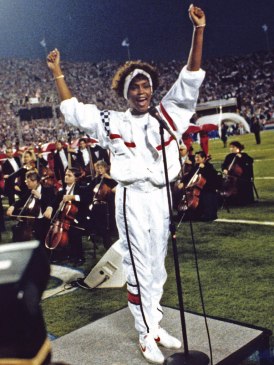 In the spirit of the Super Bowl , Lady Gaga’s beautiful rendition of the national anthem, and Beyonce and Bruno Mars slaying the halftime show, I cannot help but remember
 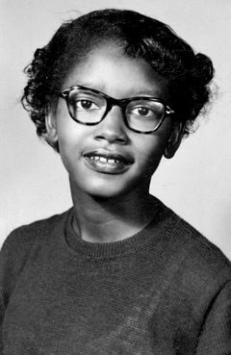 Today, we celebrate and remember Rosa Parks on what would have been her 103rd birthday. Rosa Parks is known as the “mother of the Civil Rights Movement” and we are forever grateful for all her work towards freedom and justice. However, before Rosa Parks, there was Claudette Colvin.
 Today, many Black women make the decision
 Aleidra Allen